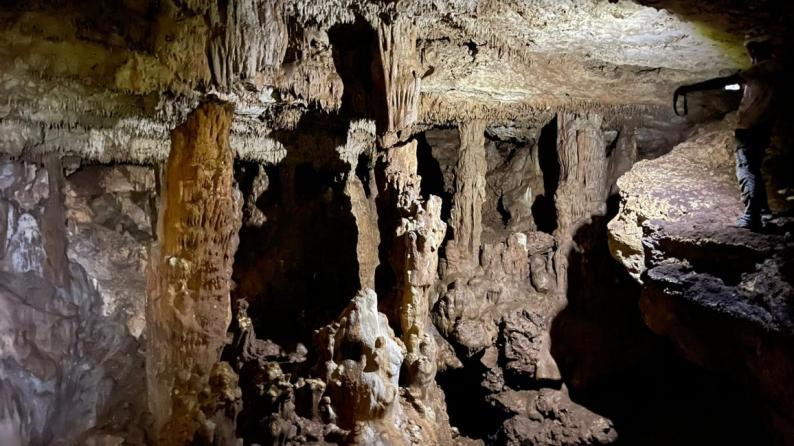
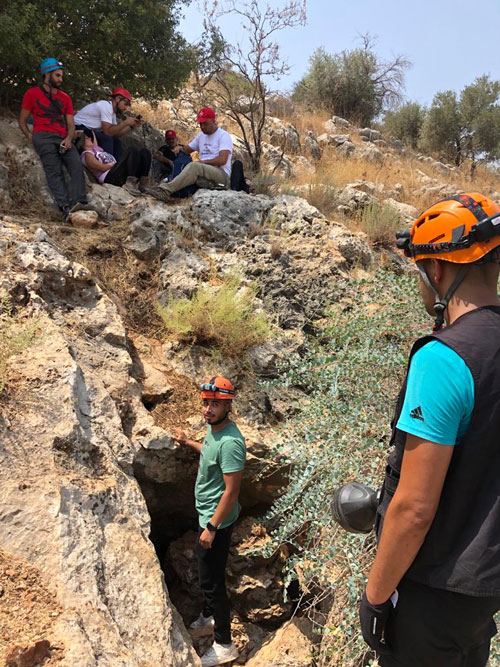
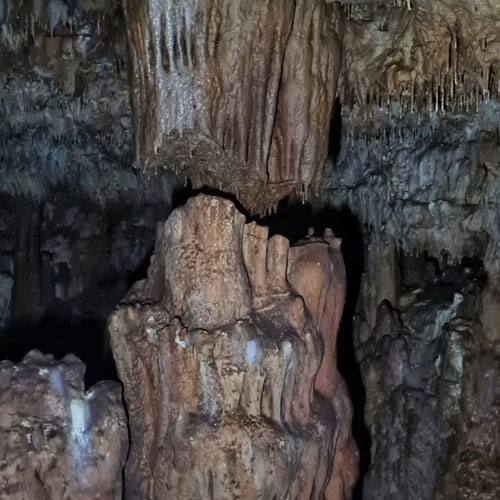
The cave is located in Wadi Qana, south of the village of Kafr Laqif, in the mountainous region between Salfit and Qalqilya. It is a natural cave with passages and chambers. The site was surveyed in 1982, and excavations were conducted in 1986 by the occupation authority. Access to the cave is through a small opening leading to a narrow passage that leads to large irregular spaces.
The cave is a natural cave where archaeological evidence from different civilizations was discovered. Three main stages in the history of the cave can be distinguished, including the Yarmouk civilization from the late sixth to early fifth millennium BCE, the Chalcolithic period, and the Early Bronze Age I, along with limited evidence of use during the Hellenistic period in the entrance area only.
Evidence of the Yarmouk civilization from the late Neolithic period, dating to the end of the sixth and the beginning of the fifth millennium BCE, consists of distinctive decorated pottery, including jars, bowls, cooking pots, and spinning bowls, along with stone tools and grinding implements. The evidence indicates the agricultural nature of the group that inhabited the cave.
As for the main second stage, it dates back to the Chalcolithic period, which was the main period of use of the cave as a burial area. Ten tombs were found, containing human bones, with some used for secondary burial. Funeral attachments include pottery, basalt, and ivory vessels, beads, and metal tools made of copper. Among the notable discoveries in this cave is the finding of copper and eight gold rings and electro. This is considered the oldest evidence of gold use in the fertile crescent region.