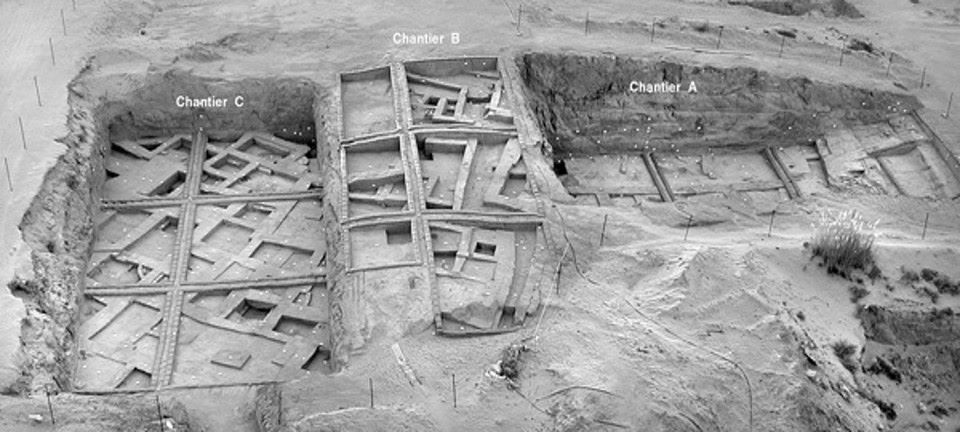
Gaza City is located in the southern part of the Palestinian coastal plain, rising about 55 meters above sea level and approximately 3 km away from it. It enjoys a strategic location as the southern gateway to Palestine on the ancient coastal road "Via Maris" and has a seaport on the Mediterranean Sea. Gaza is known for its location at Tel al-Khuruba. Flanders referred to ancient Gaza as Tel al-Ajul, a site excavated between 1931-1935, with results published in five volumes. The main period of settlement dates back to the Middle and Late Bronze Ages. Excavations in Tel al-Sakan, close to Tel al-Ajul, revealed archaeological evidence from the Early Bronze Age and a major settlement period in the Early Bronze Age III, preceding the settlement in Tel al-Ajul.
Gaza was mentioned in historical sources in the fifteenth century BCE as "Gazatu" in the list of cities opened by the Egyptian Pharaoh Thutmose III. It was described as a Canaanite city and mentioned in documents from the fourteenth-century BCE at Tell el-Amarna and Tell el-Hesi as an Egyptian administrative center. Gaza is also cited in Torah sources as one of the five Philistine cities and represented the final southern border of Philistine control in the early twelfth century BCE. Sources indicate that the temple of the Philistine god Dagon was in Gaza.
Gaza came under Assyrian control during the campaign of King Tiglath-Pileser III in 723 BCE but remained a Palestinian city. Pharaoh Necho briefly occupied Gaza in 609 BCE. Gaza then became a strong fortress during the Persian period, and Herod renamed it Gadara. Historical sources suggest that Gaza was the only city to resist Alexander the Great during his campaign in Palestine. The city endured a long siege, and its ruler, Batis, did not surrender, leading to its forceful occupation. Batis narrowly escaped assassination at the hands of an Arabian dagger near its gates.
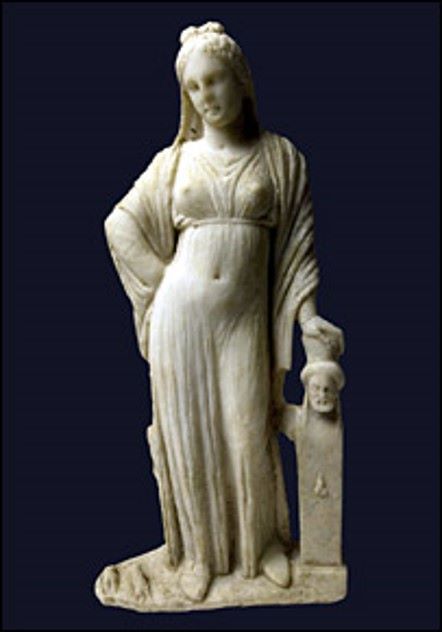
During the Hellenistic period, Gaza was the northernmost Phoenician station until its capture by Antiochus III in 198 BCE. It was subsequently destroyed by the Hasmoneans. The city was rebuilt at the beginning of the Roman period, and apart from a brief period of Herodian rule, it was directly governed by the Roman consul in Syria. Gaza flourished in the Roman period, and large temples were erected for the gods Zeus, Helios, Aphrodite, Apollo, and the city's protective god, Marna. The worship of Marna continued until the fifth century CE, after the victory of Christianity.
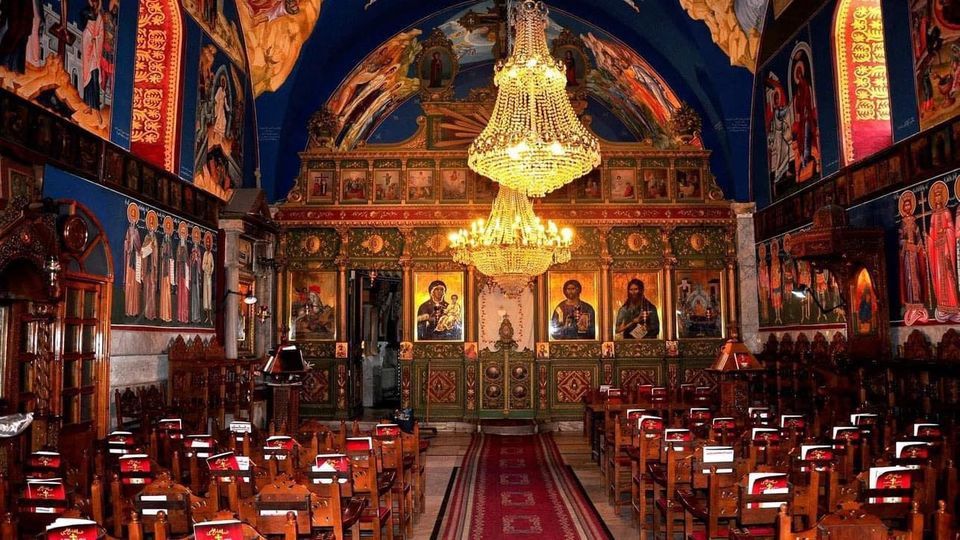
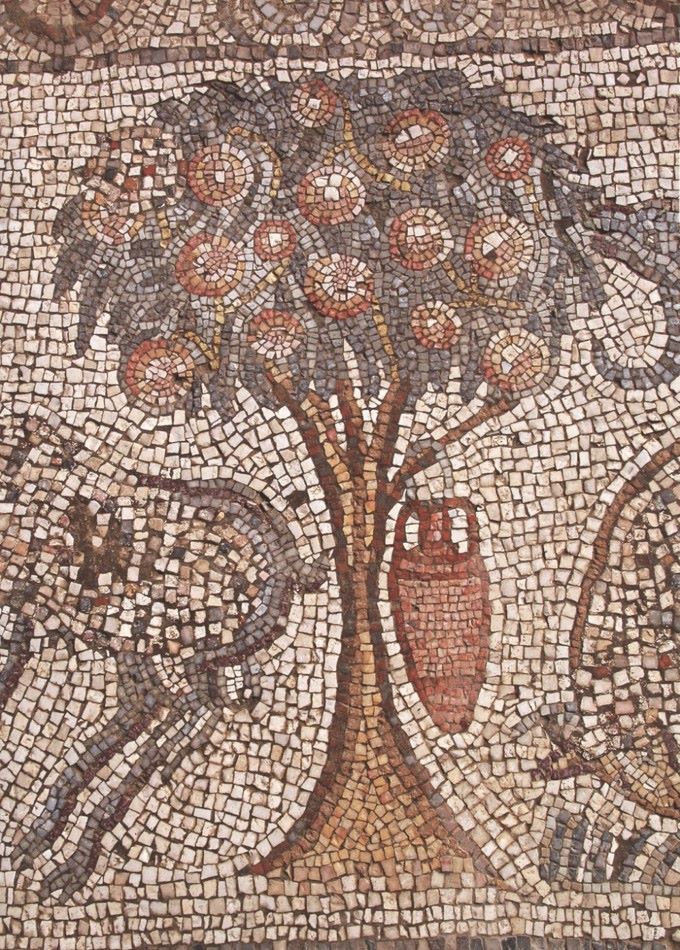
Since the fifth century, Gaza became an important center in the Christian Byzantine world, producing intellectual figures such as Procopius of Gaza and Saint Hilarion, who was born in nearby Tiberias. Archaeological excavations revealed Hilarion's monastery in Tel Amor near Nuseirat. The city of Gaza appeared on the Madaba Map as a large city with paved streets and a church at its center. Many churches were built during the Byzantine period. New Gaza developed around the port area. Gaza had its own calendar, starting around 60 BCE, in addition to the Seleucid calendar, which considered the Battle of Gaza in 312 BCE as the beginning of its later-called "Seleucid Era." Emperor Hadrian, who established a calendar starting in 129 CE, also adopted the city's calendar.
Gaza had connections with the Arabian Peninsula through the incense route since the seventh century BCE. Ancient writings revealed trade relations connecting Gaza to Yemen in the third century BCE. The city transported exports from the Arabian Peninsula to the port of Gaza and then to the Mediterranean countries.
Gaza fell under Islamic Arab rule in 635 CE and became an administrative center for the southern Negev region, as known from the Nessana papyrus. The city thrived in the New Testament era. Hashem, the grandfather of the Prophet Muhammad, was buried in Gaza, hence its name "Gaza Hashem." The great Imam Muhammad ibn Idris al-Shafi'i was born in 767 CE in a house west of Hamam al-Samara, where his daughter Asia and his servant Shaykh Atiya were buried.
The city was conquered by the Franks in 1149 under King Baldwin I, who called it "Ghazzah." Later, it became a stronghold for the Knights Templar until its liberation by Salah al-Din Ayyubi. In the Mamluk period, Gaza became the center of a district covering the southern coastal region, the capital of the southern Sanjaq, an important trade center, and a major station on the caravan route from Egypt to Palestine. Gaza was a fortified city with walls until the eighteenth century, featuring seven gates named after cities they led to: Bab al-Ablaqiyya, Bab Mimas, Bab al-Bahr, Bab Asqalan, Bab al-Khalil, Bab al-Muntar, and Bab al-Darum. After the Nakba in 1948, Gaza became a regional center for the new Gaza Strip, administered by Egypt until the occupation of Gaza in 1967. This situation continued until the establishment of the Palestinian Authority in 1994. The Gaza Strip includes cities such as Gaza, Beit Hanoun, Deir al-Balah, Khan Yunis, and Rafah, along with numerous villages. The Gaza Strip encompasses a large number of archaeological sites, landmarks, and buildings dating back to various periods.