The city of Hebron has been renowned for glassmaking since ancient times. This industry emerged at the beginning of the Roman period and flourished during the Arab Islamic, medieval, and Ottoman periods. It was concentrated as a craft in the old town, with families playing a prominent role in its development. Sharia court records indicate the existence of seven glassmaking workshops in the mid-nineteenth century. Three of these workshops were located in Haret al-Qazazeen, and three others were in Haret al-Sawakeneh. Haret al-Qazazeen, named after the glass industry, was governed by craft regulations, led by a sheikh overseeing the industry and workers. The knowledge of glassmaking was passed down from ancestors to descendants within specific families.
The origins of glassmaking date back to the third millennium BCE in Egypt and Iraq. In Palestine, glassmaking using the casting method appeared in the mid-second millennium BCE. Production remained on a very limited scale until the colored glass industry developed in Phoenicia, continuing until the third century BCE. The true revolution in glassmaking occurred in the second half of the first century BCE with the discovery of glassblowing. This technique spread throughout the Roman Empire, and the industry developed in Palestine, showcasing diversity in shapes and colors.
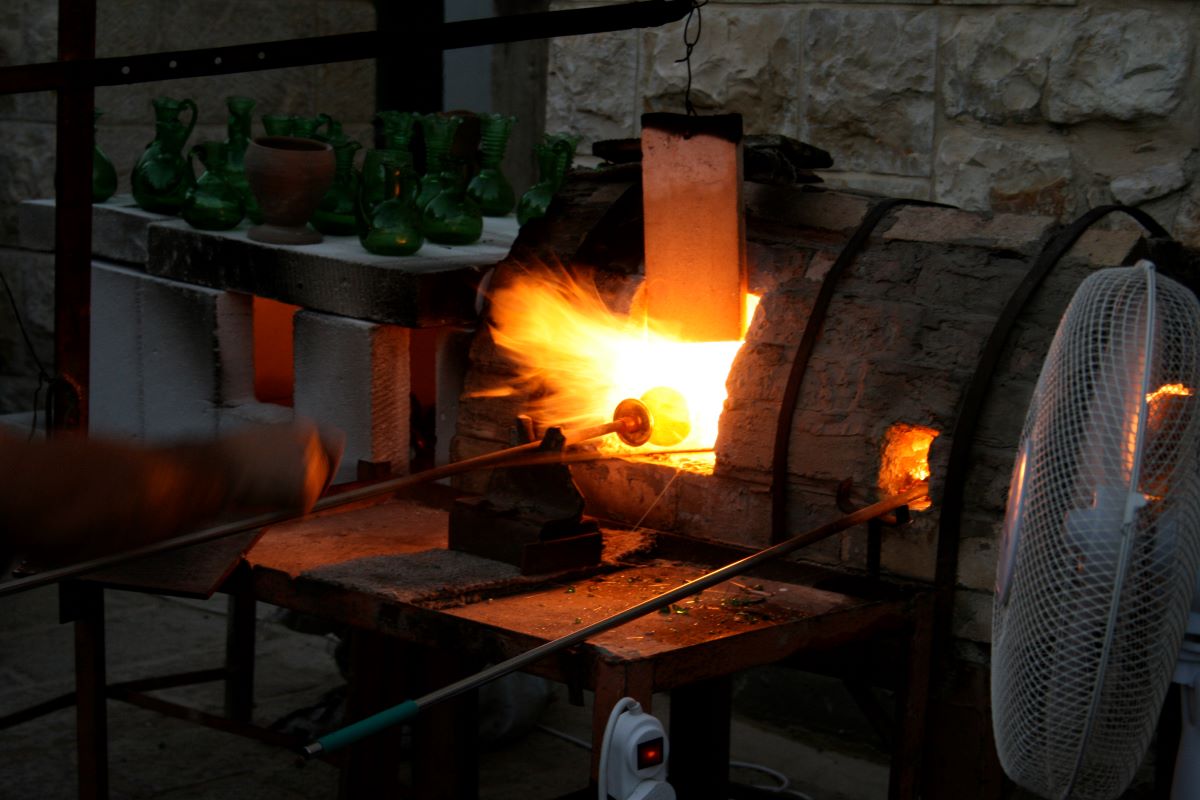
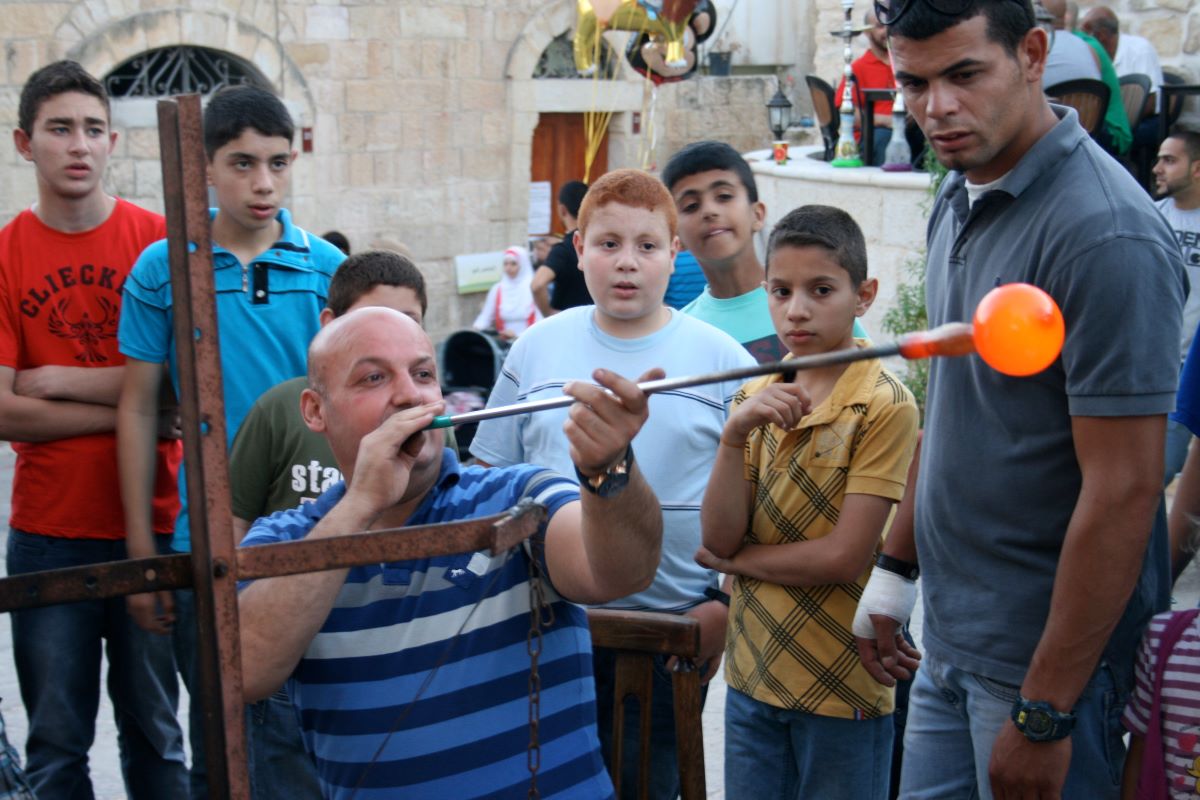
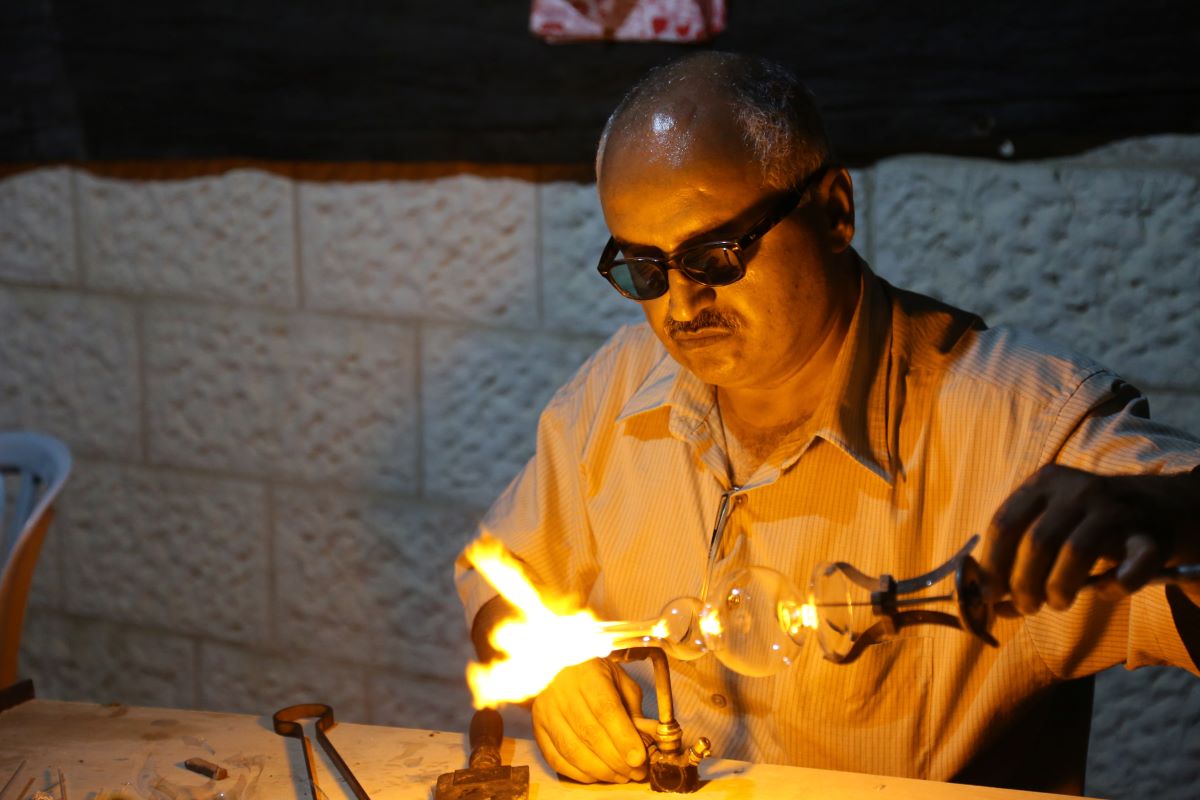
Glass is primarily composed of three compounds: soda ash, lime, and sand. Hebron glass is made using the ancient glassblowing method, a tradition that spans more than a thousand years. Local materials such as feldspar, soda ash, and locally available wood for fuel are used. The dyes were traditionally sourced from Egypt. The glass factory consists of melting furnaces constructed from heat-resistant baked clay. The glass is melted to form an insulating layer, preventing materials from sticking during melting. Craftsmen and workers then throw the required glassmaking materials into the melting furnace, where the glass block is formed. This block is shaped using the blowing technique.
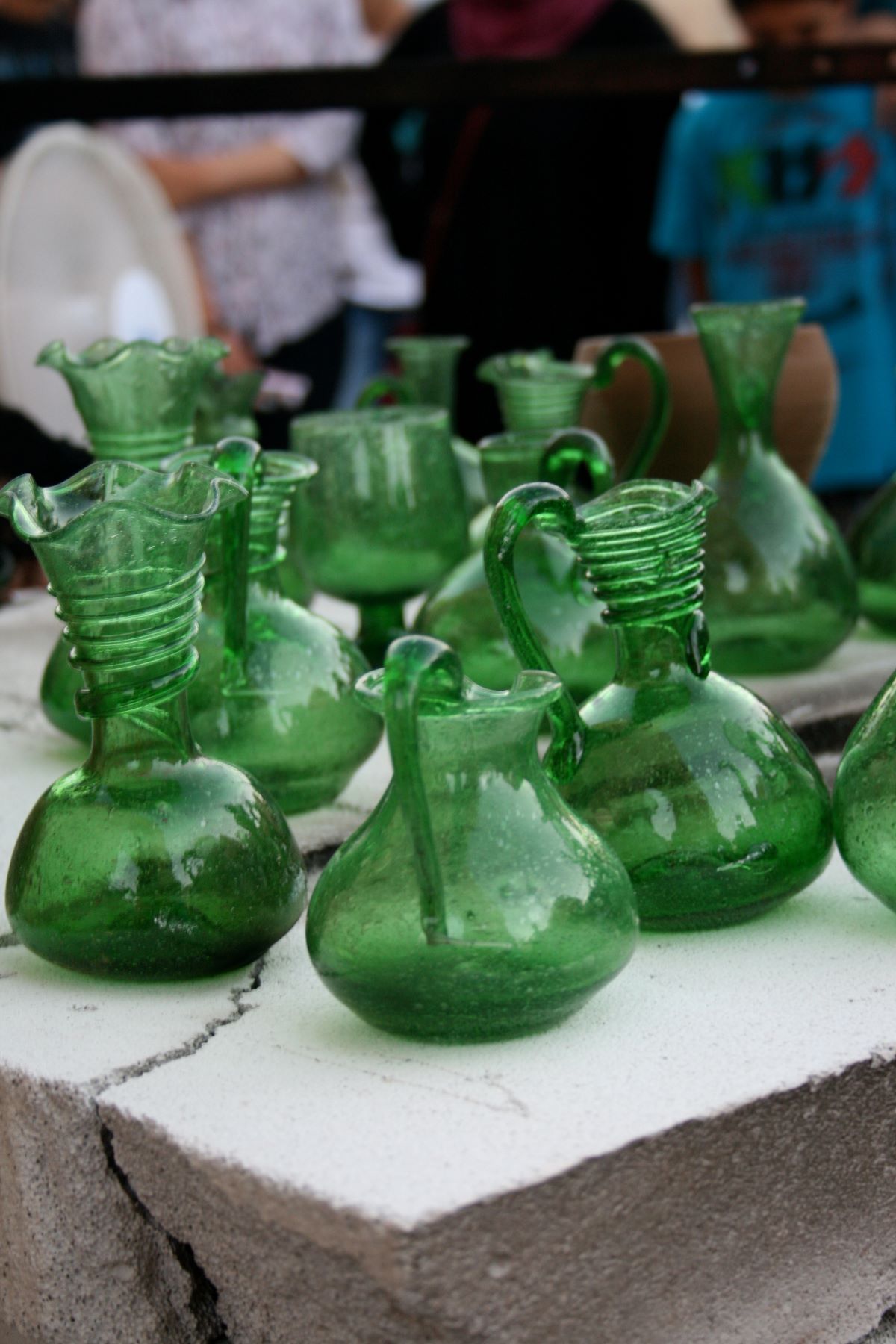
The glass factories in the city of Hebron produced pitchers, cups, lanterns, bracelets, rings, and pools. These products were exported to Jerusalem, Nablus, Cairo, and then to European markets through the port of Jaffa. Hebron participated in the World Exhibition held in Vienna in 1873, highlighting the importance of this industry. Glass craftsmen in Hebron established a glass factory outside the city, and the industry extended not only to Palestine but also reached Turkey. Despite the recent decline in the value of utilitarian glass, it continues to be used for decorative items and tourist products.