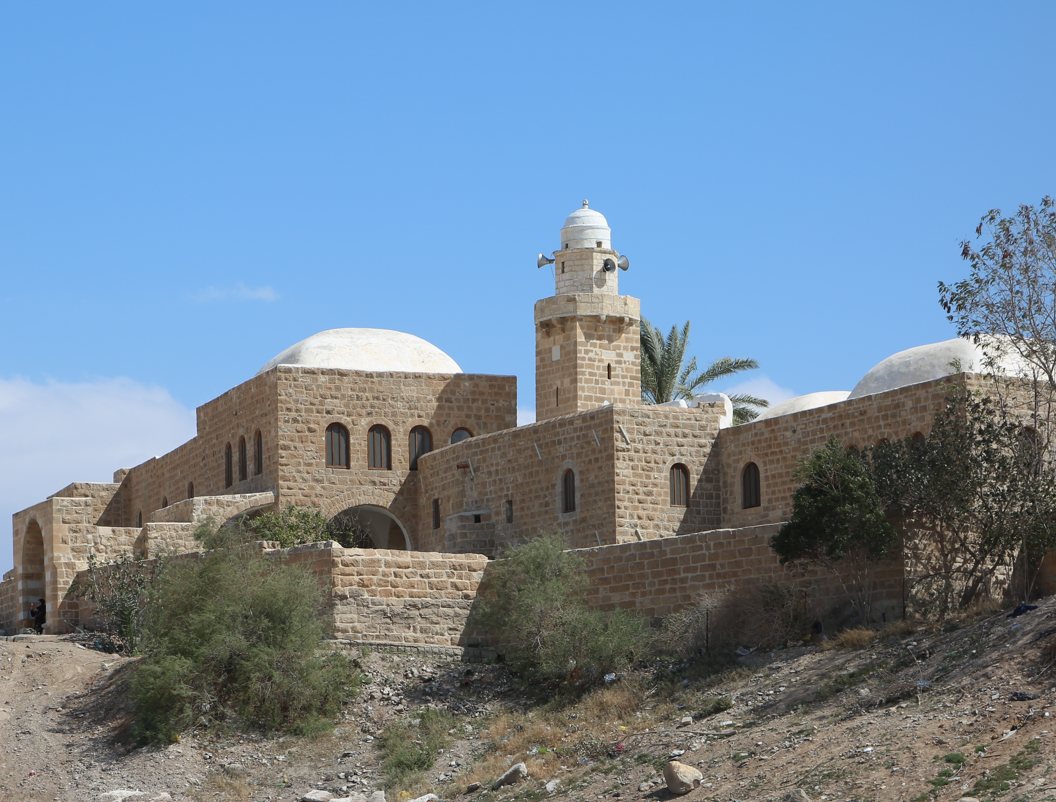
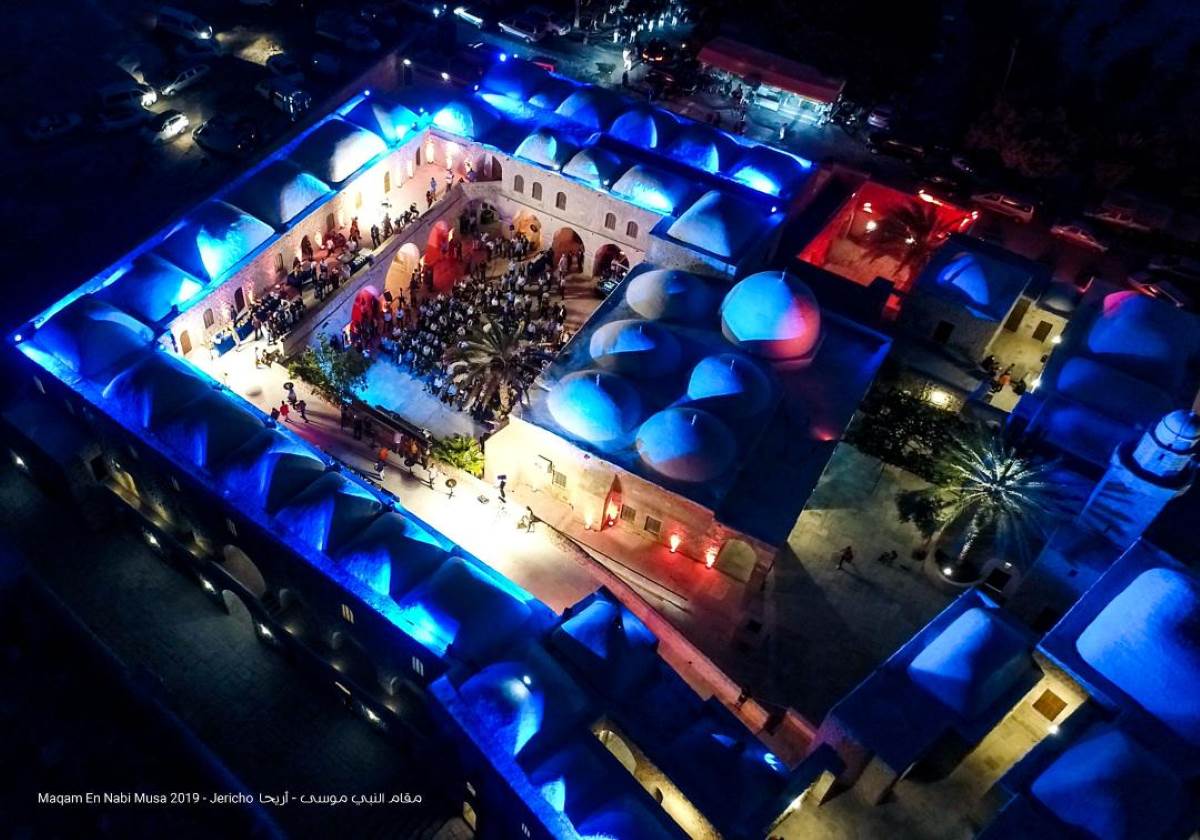
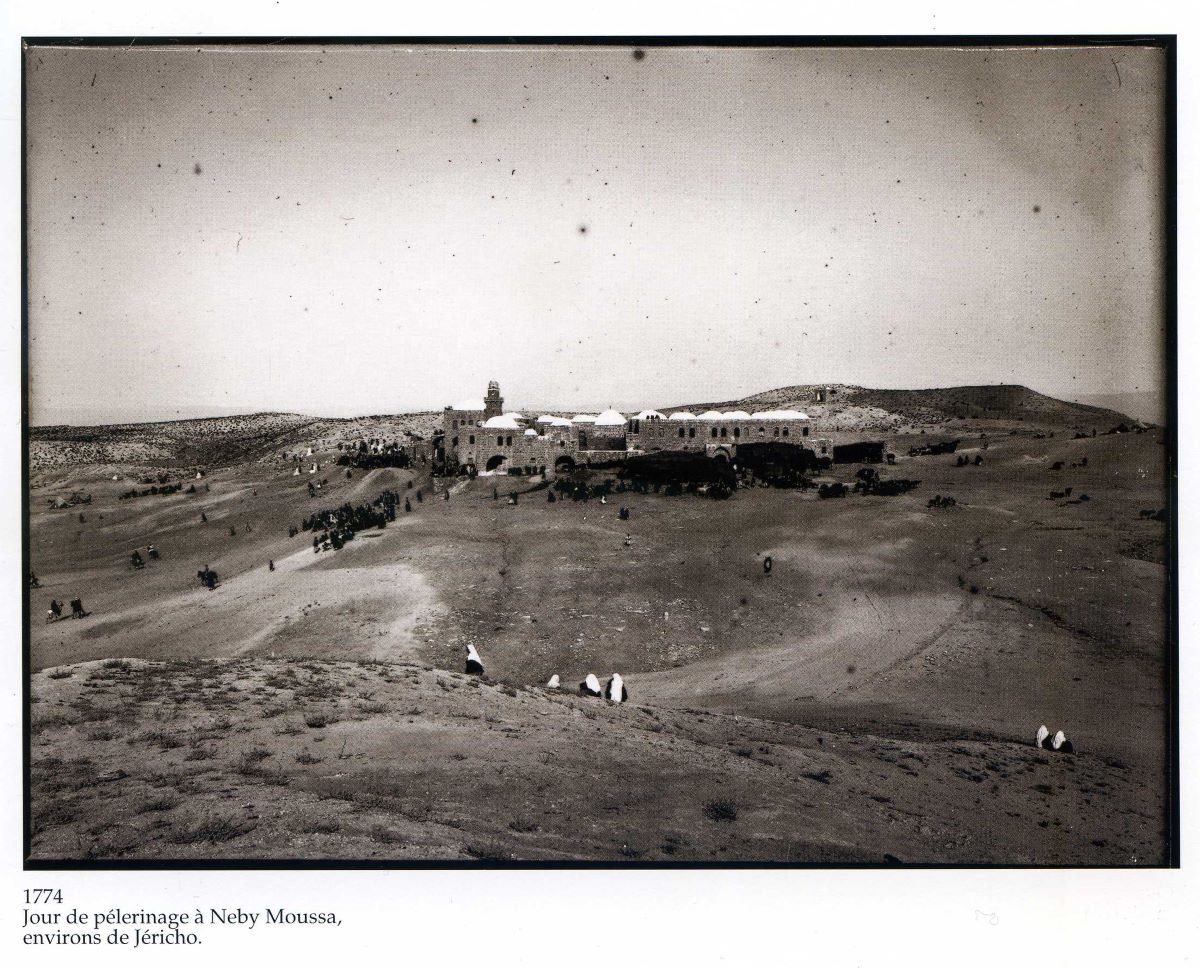
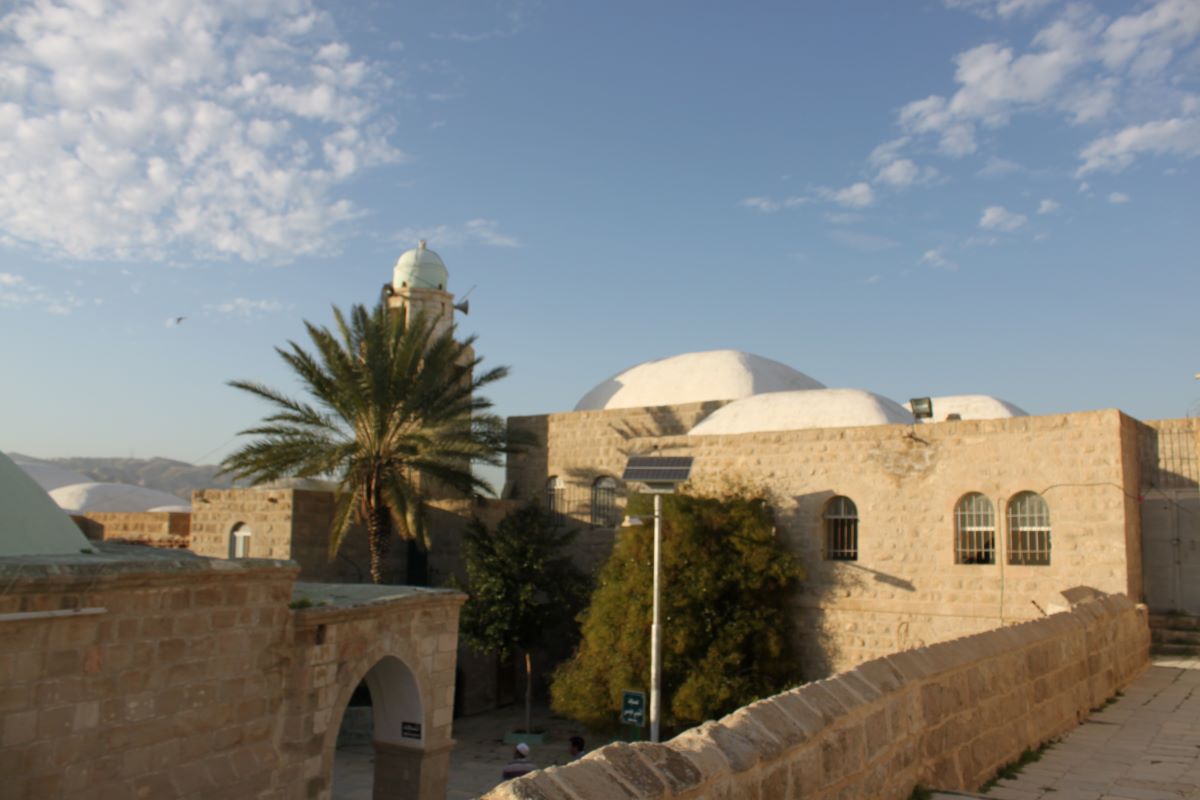
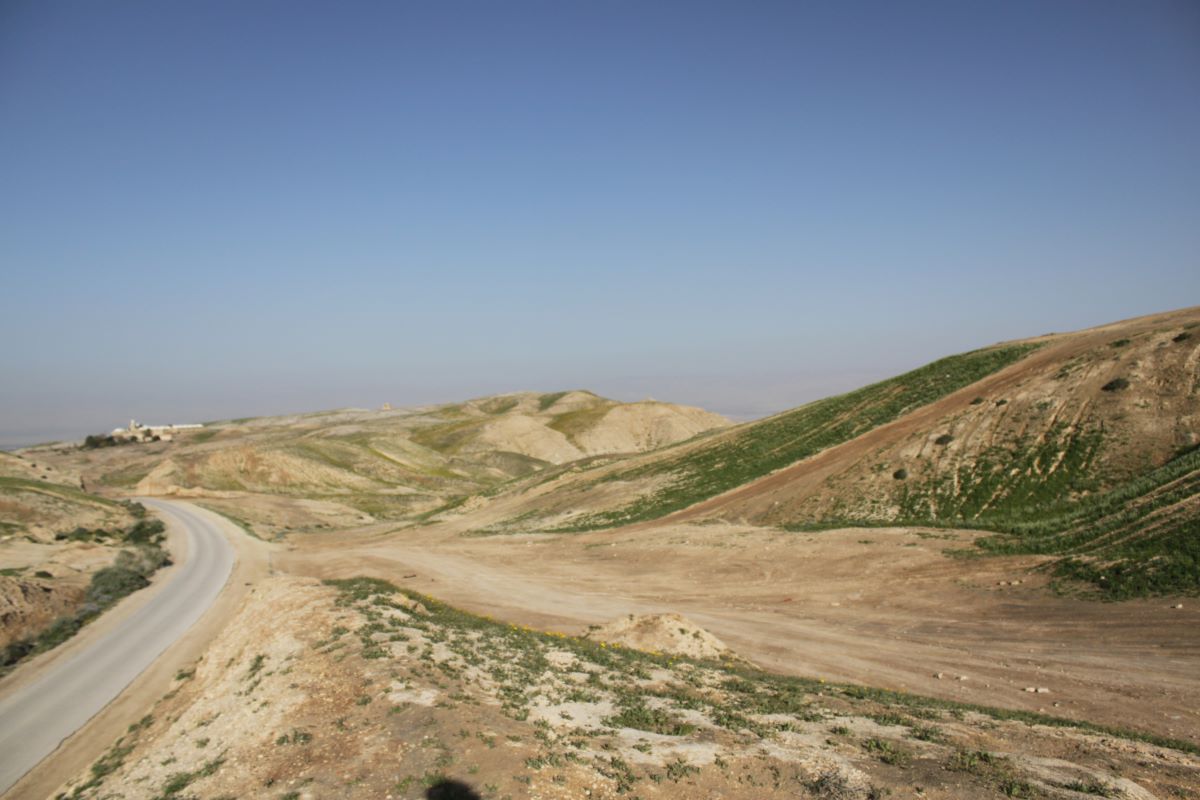
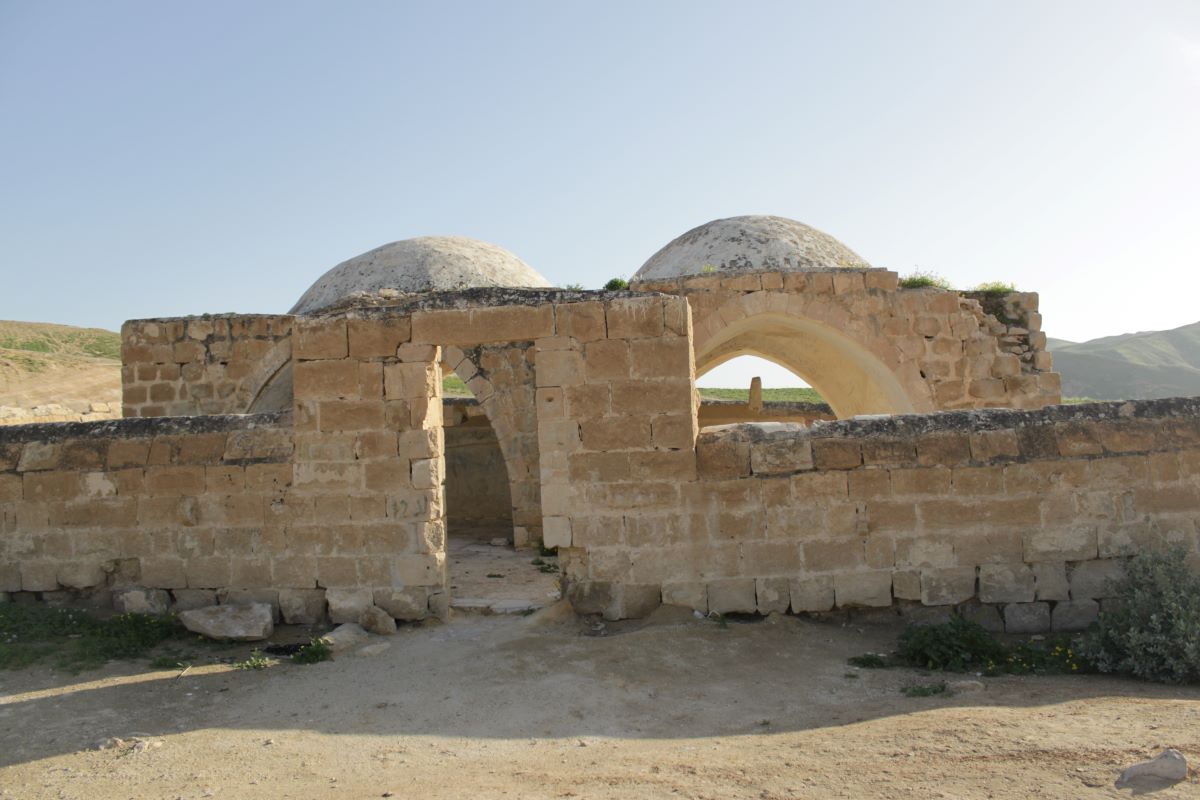
The Shrine of Prophet Moses is located in the wilderness of Jerusalem, 8 kilometers south of Jericho, 28 kilometers east of Jerusalem, and 2 kilometers from the Jerusalem-Jericho road. It stands on sulfuric rocky hills resembling sand dunes, overlooking the Dead Sea and the city of Jericho. The structure includes a mosque, a shrine, and approximately 150 rooms of various sizes. The construction took place in several historical stages.
This shrine was established by the Mamluk Sultan Al-Zahir Baybars in the year 1269 AD. The foundation inscription on a marble slab outside the eastern wall of the shrine room and inside the mosque is written in calligraphic script. The inscription spans fifteen lines, stating, "In the name of Allah, the Most Gracious, the Most Merciful. Mosques are established by those who believe in Allah and the Last Day. This honorable shrine was built on the tomb of the Prophet Moses, peace be upon him, by our lord, the king Al-Zahir..."
During the Mamluk period, the shrine consisted of the tomb chamber and the mosque. Additions were made to the mosque, alongside the construction of other service facilities such as living quarters, kitchens, ovens, wells, and stables. In the late Mamluk period, the mosque was expanded, and a minaret was built to the north of the mosque. The external wall of the shrine seems to date back to this period, as indicated by an inscription on the western door. The text, dated to 1737, reads: "In the name of Allah, the Most Gracious, the Most Merciful. Allah spoke to Moses directly. He built the wells, doors, repaired the path, walls, oven, doors, and the roofs. He also renovated the land, the dome, full of goodness and blessings, by the grace of the Lord of the heavens and the earth, near the presence of Ali, Katkha in Egypt."
In the early Ottoman period, new wings were added to the building, and two new wells were dug to collect water. The shrine gained significant importance due to its location on the pilgrimage route. After a period of neglect, comprehensive restoration work was carried out on the shrine in 1885 by the Grand Mufti of Jerusalem, Mohammad Tahir Al-Husayni. This restoration included all the rooms on the first floor and their annexes, as well as reception halls on the north side of the building.
The shrine played a role in the political life during the British mandate. It was used as a camp for the Jordanian army and came under Israeli occupation until the mid-1980s when the Islamic Waqf regained control. Between 1914-1918, extensive restoration work was undertaken as part of a joint project involving the Ministry of Tourism, Antiquities, and Islamic Waqf, in collaboration with the United Nations Development Programme and funding from the European Union.