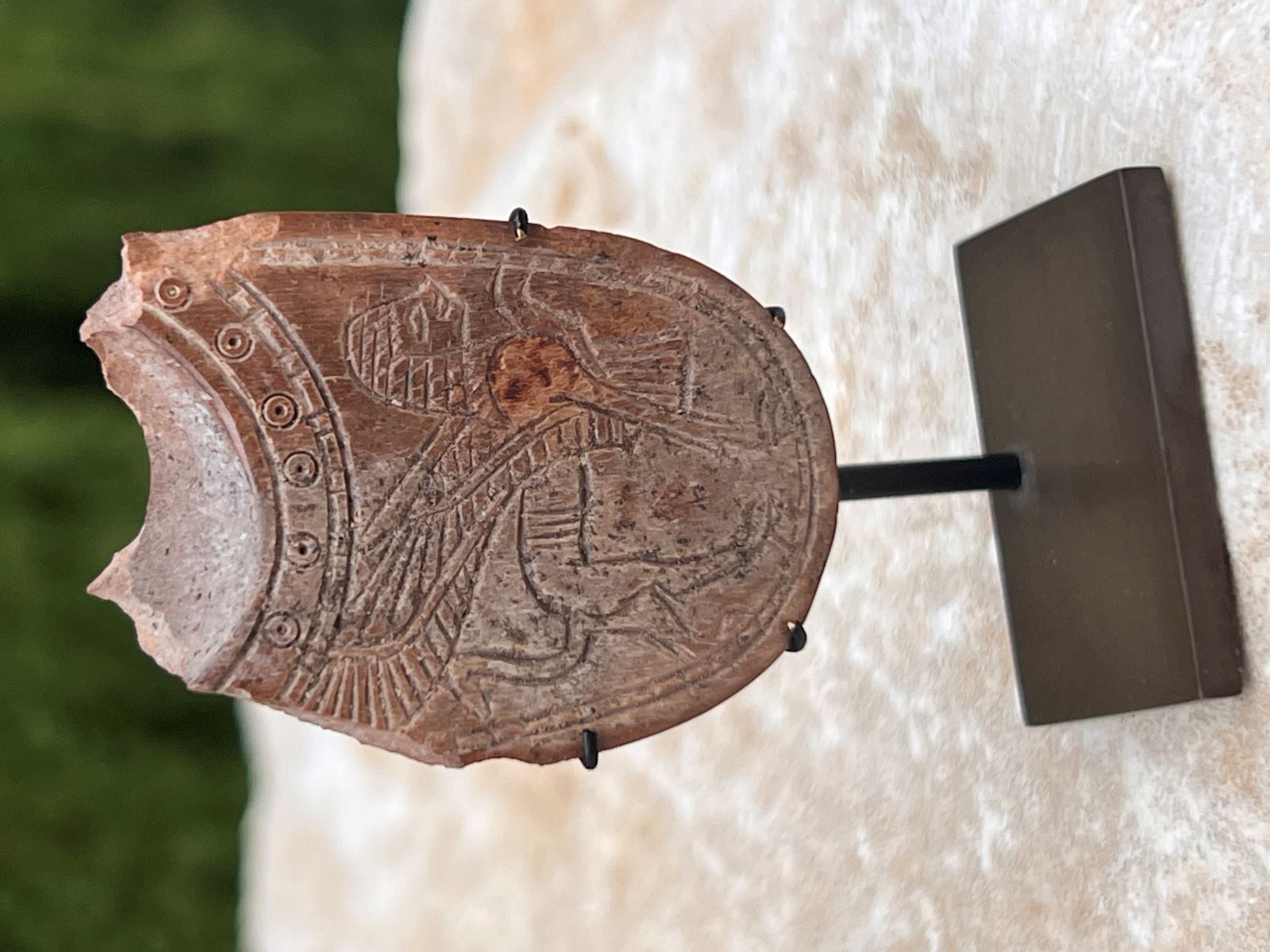
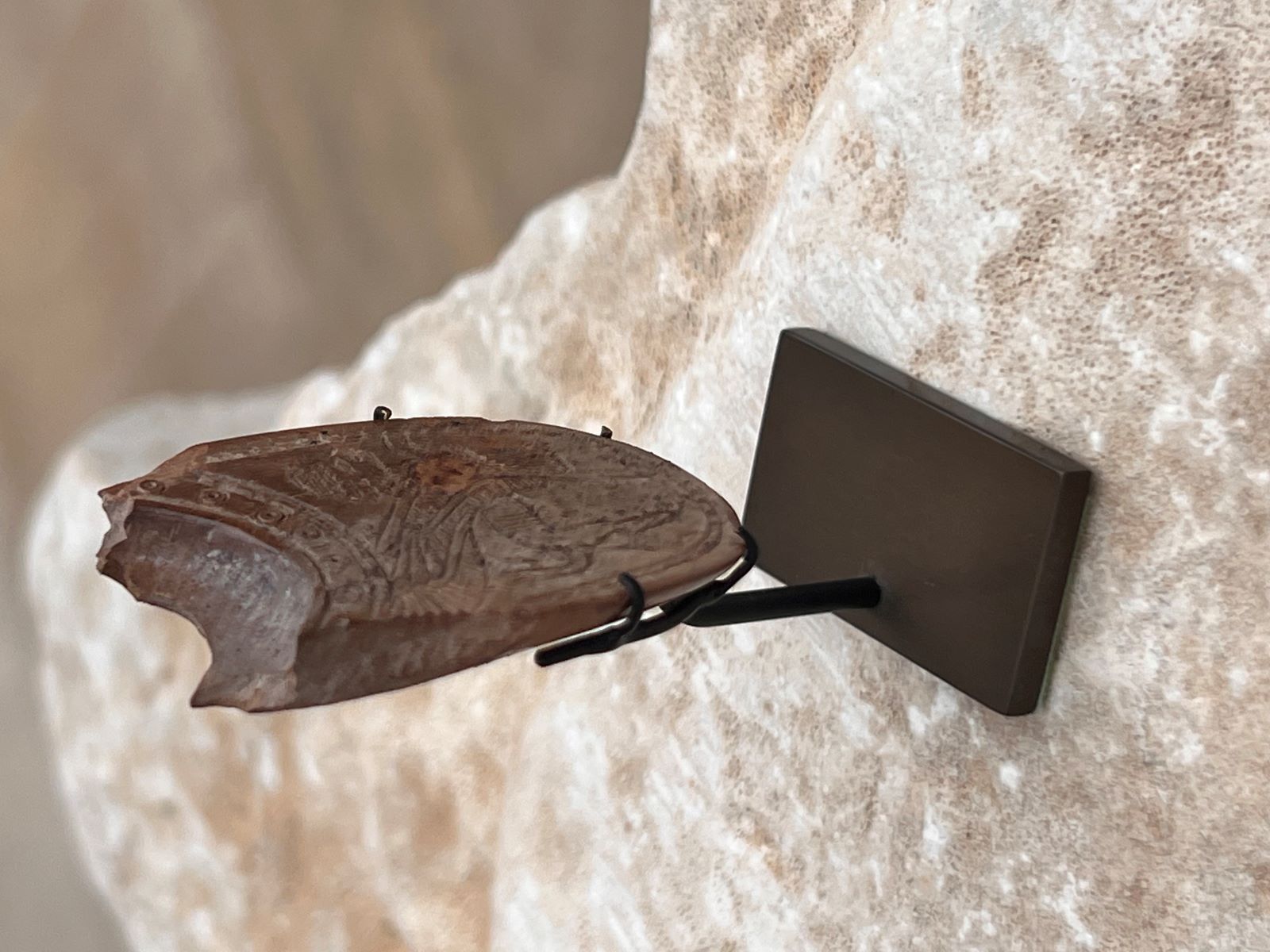
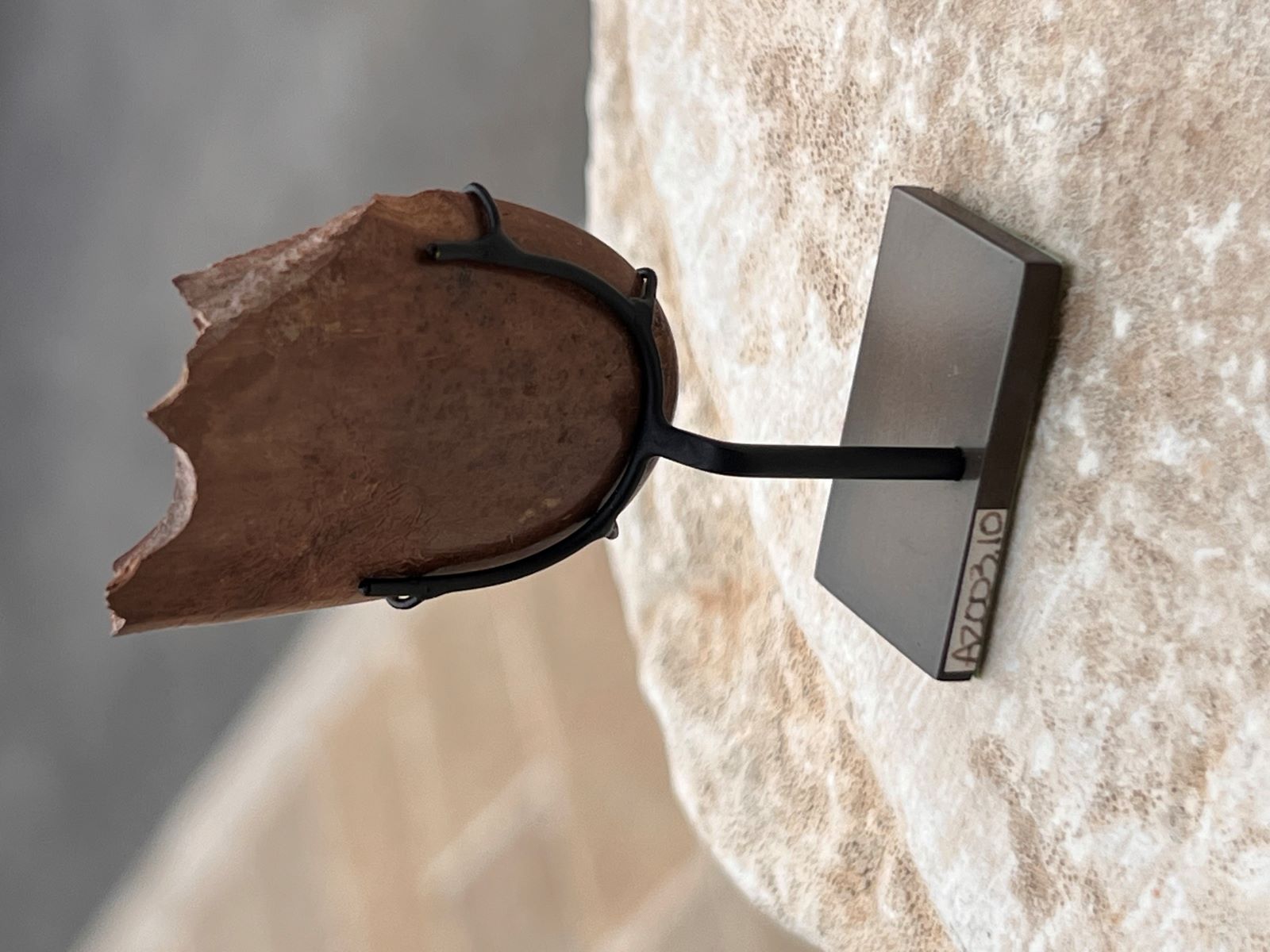
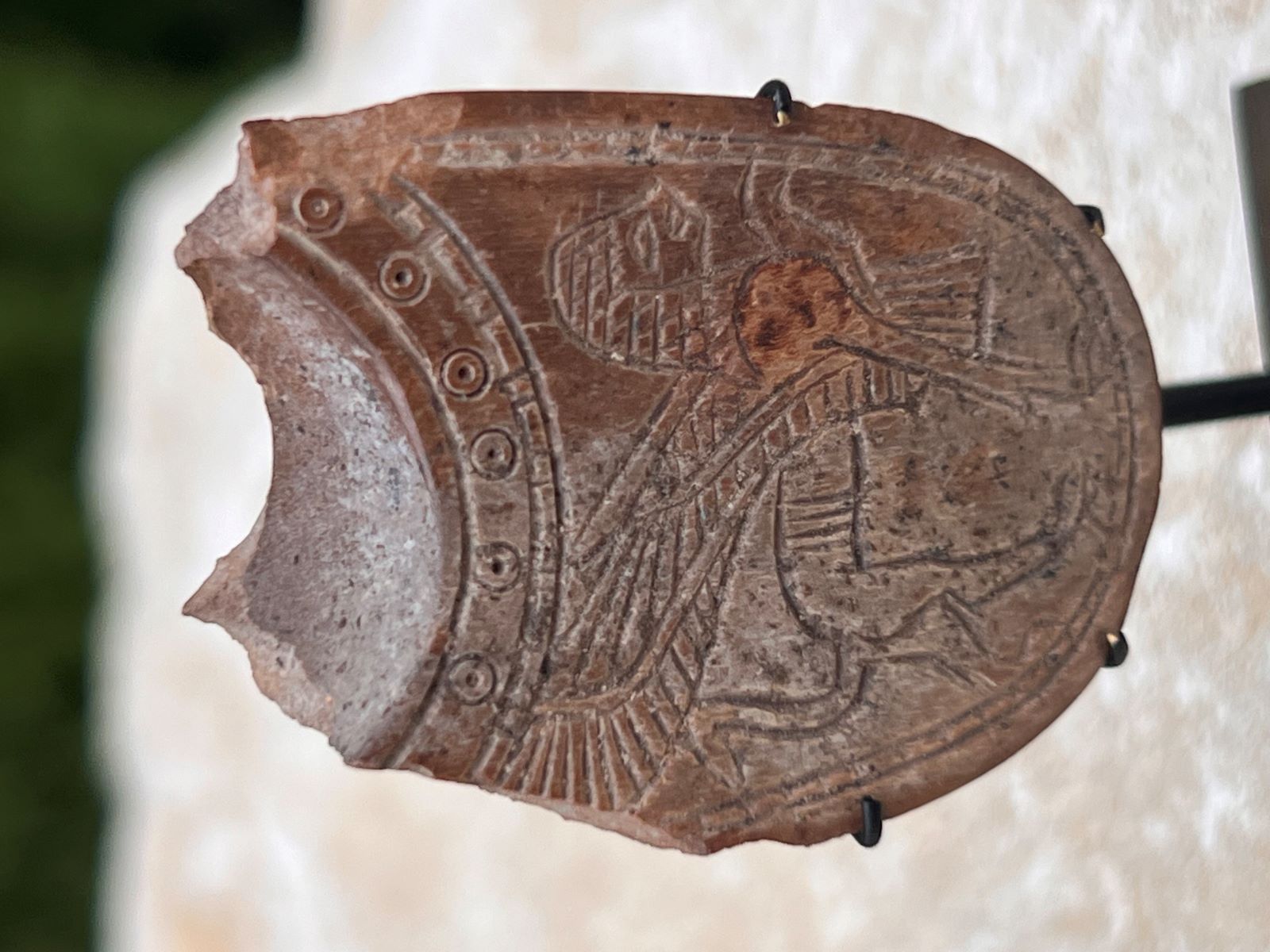
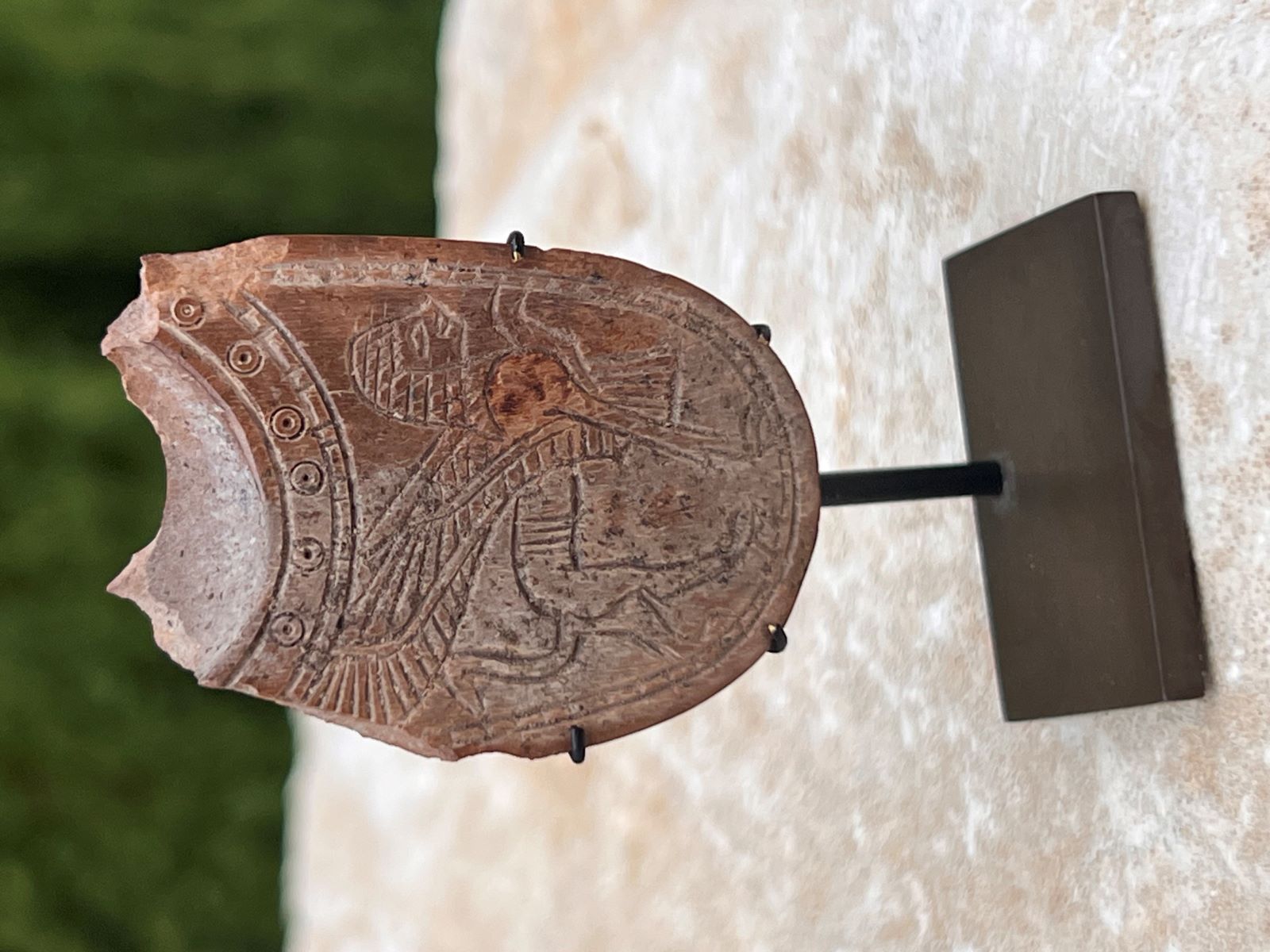
The perfume vessel is an ivory spoon, part of a censer tool, engraved with a winged lion in the Assyrian style, dating back to the 7th century BCE. The artifact was stolen from Khirbet al-Kom, later leaked through local intermediaries to an Israeli antiquities dealer, who then sold it to the American archaeologist Michael Steinhardt in 2003, as part of a collection exceeding 180 stolen artifacts from the Middle East. The United States, in accordance with an official protocol, delivered the only piece to the Ministry of Tourism and Antiquities, returning stolen artifacts to their original countries, including one piece to Palestine and forty artifacts to Israel.
Among the artifacts handed over to the Israeli side was an agate amulet in the shape of a fish, also taken from Khirbet al-Kom, the same location from which the stolen ivory spoon was removed, now held by the Ministry of Tourism and Antiquities. This piece represents one of tens of thousands of illegally acquired and transported artifacts from the occupied Palestinian territories, in violation of international humanitarian law.
Khirbet al-Kom is located 13 km west of the city of Hebron. Archaeological excavations were conducted in Khirbet al-Kom between 1967-1968 by the American biblical archaeologist William Dever, revealing a burial site from the Iron Age II. Subsequent excavations within the town of al-Kom revealed traces from the Iron Age II, including parts of the site's wall and gate. Additionally, evidence from the Early Bronze Age and Hellenistic period emerged in the excavations.