The Canaanite Alphabet: Transition writing from Pictorial to Linear Form
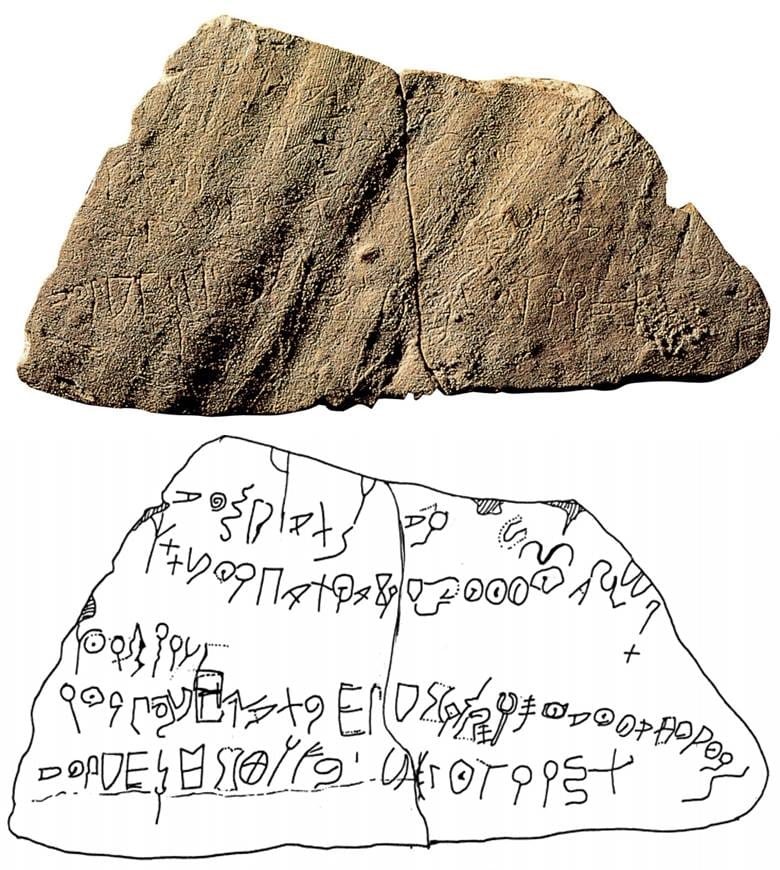
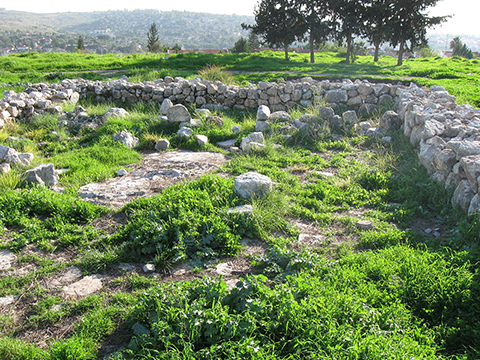
Writing was found on a pottery fragment discovered in 1976 in the village of Sarta, affiliated with the Palestinian village of Sarta. Sarta is located 13 km east of the city of Ras El Ain, known for the Canaanite site of Aviq. The writing dates back to the 11th century BCE and consists of an inscription in cuneiform with five lines. It is a linear script written from left to right, representing a school exercise for a non-experienced Canaanite alphabet student who attempted the exercise in five lines. The last line contains 22 characters of the Canaanite alphabet with a rearrangement of the order of the letters "fa" and "ain." The fifth line:
ʾ b g d h (w) ḥ ṭ (z) y k l (m?) n s(?) f(?) ʿ ṣ q(?) q (r) sh t
The significance of this exercise lies in its derivation from the Canaanite alphabet and its indication of its spread in Palestine. It represents the process of transformation in Canaanite writing from pictorial to linear form.