Deir al-Balah is located 13 km south of Gaza and was known as "Al-Darum" in the Semitic languages, meaning the south. It was also known as one of the gates of Gaza leading to Deir al-Balah, known as "Al-Darum." Deir al-Balah held strategic value as a station on the ancient coastal road.
Archaeological and historical sources indicate continuous human settlement from the late Bronze Age until the present. It fell into Muslim hands after the Battle of Wadi al-Milh and played a role in the Crusades, later reclaimed by the Ayyubids after the Treaty of Ramla.
Between 1972-1982, excavations were conducted on the Deir al-Balah beach by the occupying authority under the supervision of Trudy Dothan. The findings revealed human settlement from the late Bronze Age to the Byzantine period, including a large cemetery from the late Bronze Age.
The earliest settlement dates back to the second half of the 14th century BCE. Remains from this period include residential houses with more than 20 rooms, surrounded by a water tank previously used as a sand quarry. Large amounts of discovered bones indicate reliance on animal husbandry. The excavations also revealed the remains of a small fort with 15 rooms, surrounded by towers at its corners, dating back to the 13th century BCE. The site includes traces of an industrial area, a furnace, water basins for preparing clay coffins, and pottery dating back to the early Iron Age.
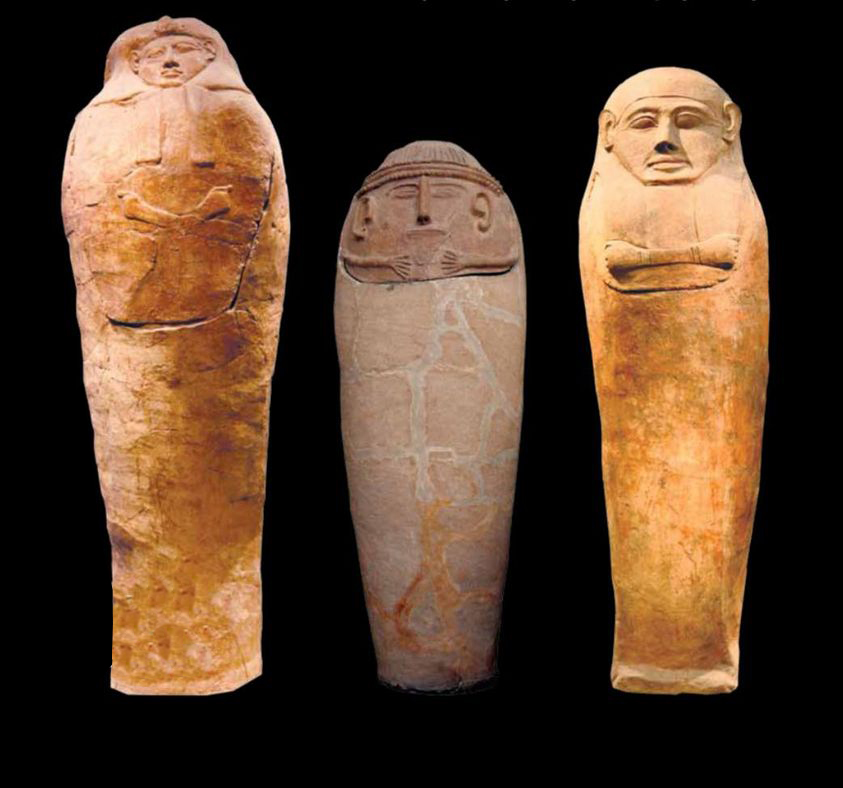
Excavations also uncovered a cemetery from the late Bronze Age used in the 14th and 13th centuries BCE. What distinguishes this cemetery is the clay coffins, each accommodating between two to four individuals. These coffins were placed in rock-cut tombs with simple graves. The cylindrical-shaped coffins feature a movable lid with depictions of facial features, arms, and human hands. Funerary offerings accompanying the deceased include funerary inscriptions, bowls, and large quantities of local, Greek, Cypriot, and imported Egyptian pottery.