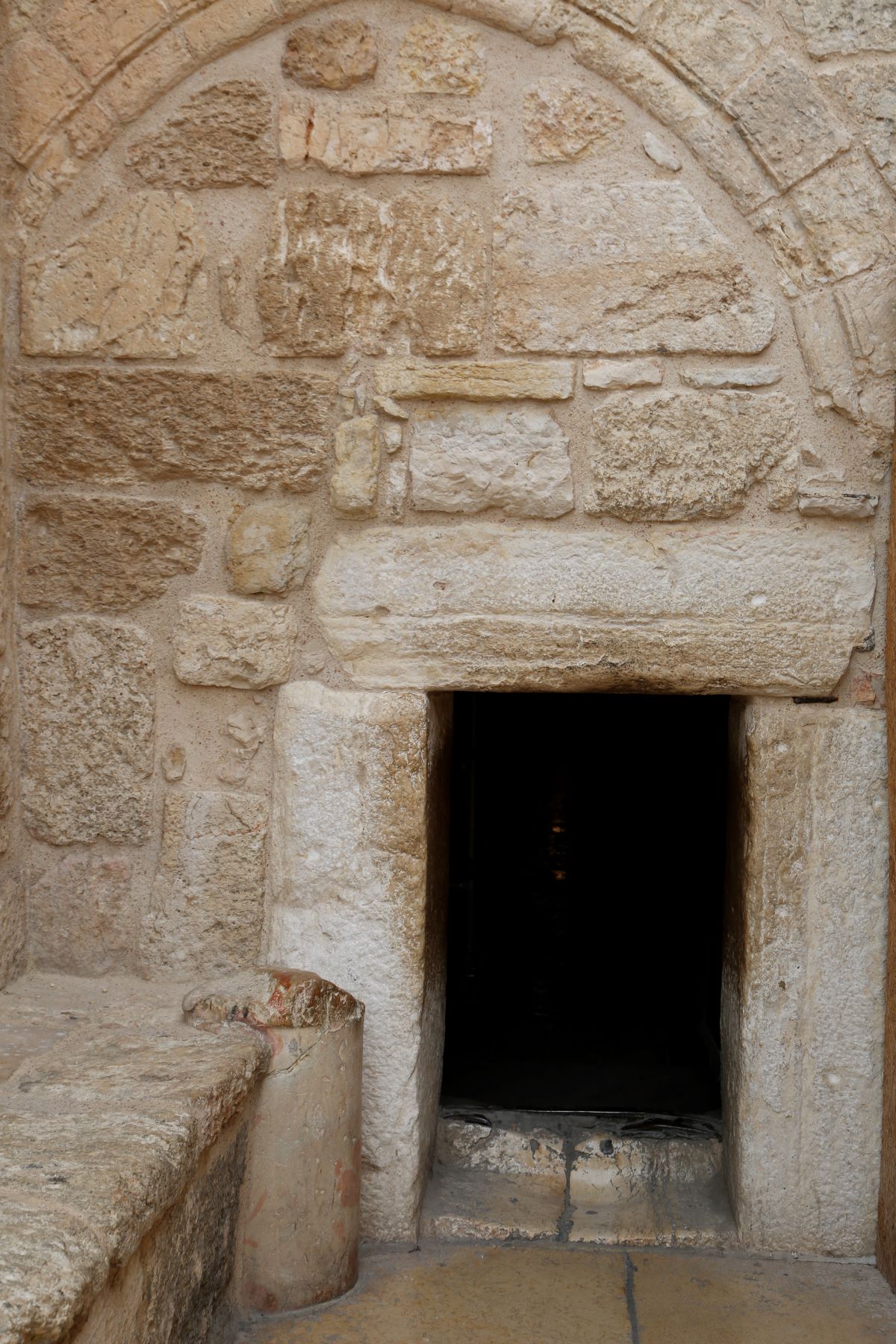
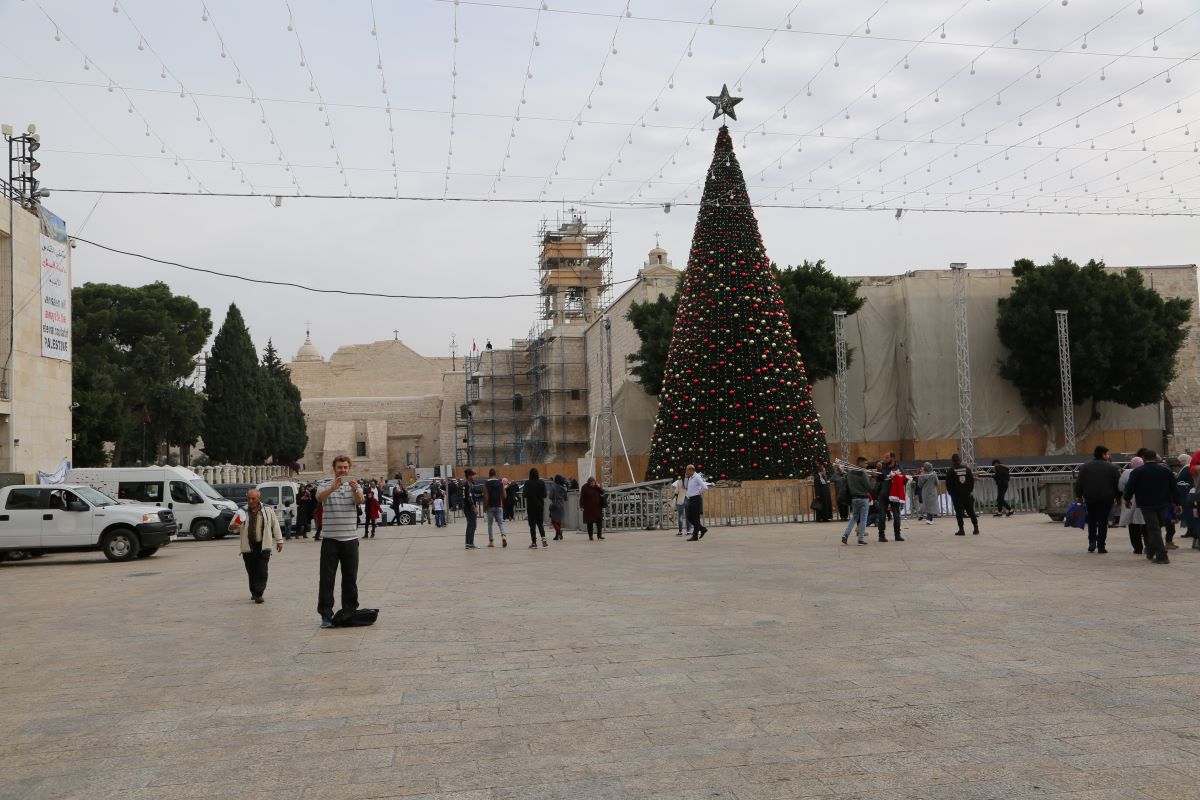
The main church was constructed by Queen Helena, who arrived in Palestine in 325 AD. She chose a group of caves believed to be the birthplace of Jesus Christ as the site for building the church. Its construction was completed in 339 AD above the caves. The church was destroyed during the Samaritan revolt in 529 AD and was renovated during the Frankish occupation of Jerusalem. Remarkably, the church was spared from destruction when the Persians invaded Palestine in 614 AD. The invaders saw the beautiful mosaic decorations at its entrance depicting Magi in Persian attire, allowing it to remain intact.
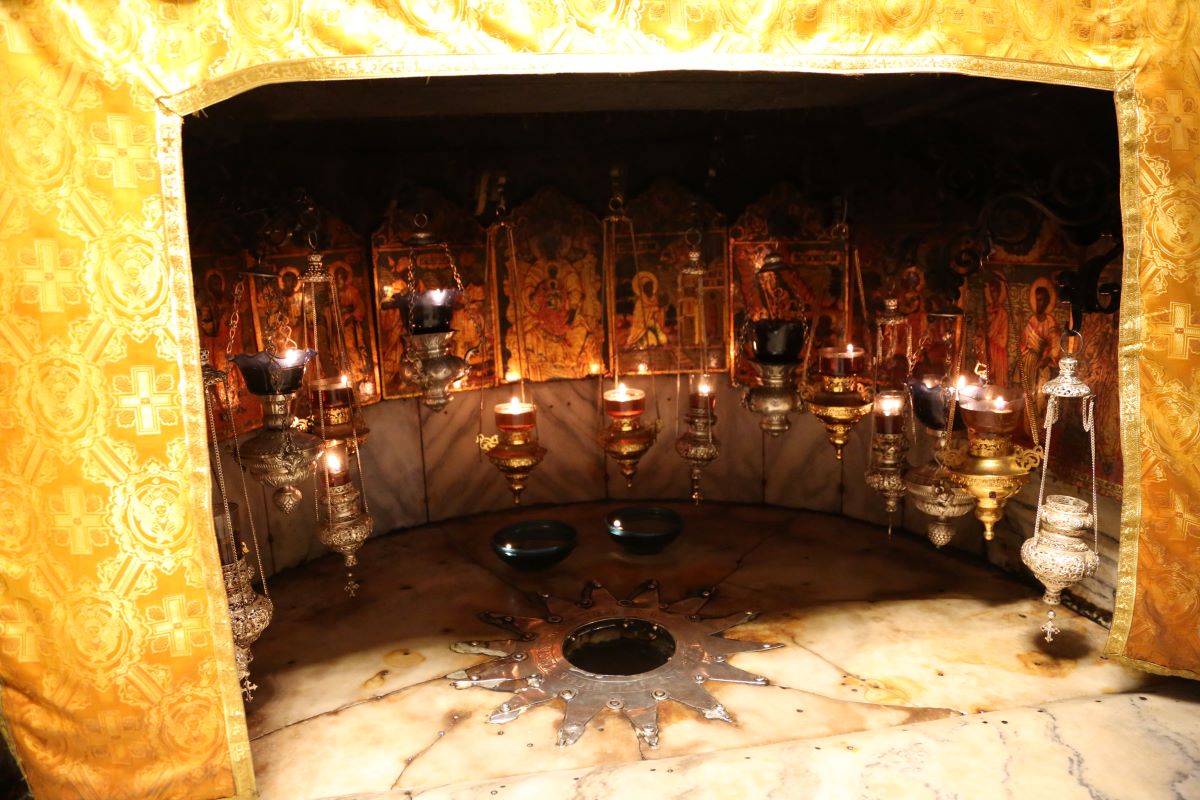
The church holds religious significance as it is located above the sacred site, the cave where Jesus Christ was born, an event of universal importance. It is adorned with artistic elements like mosaics on the interior. The church contains some caves with tombs, as well as another cave housing the tomb of Saint Jerome, who translated the Bible from Old Hebrew to Latin.
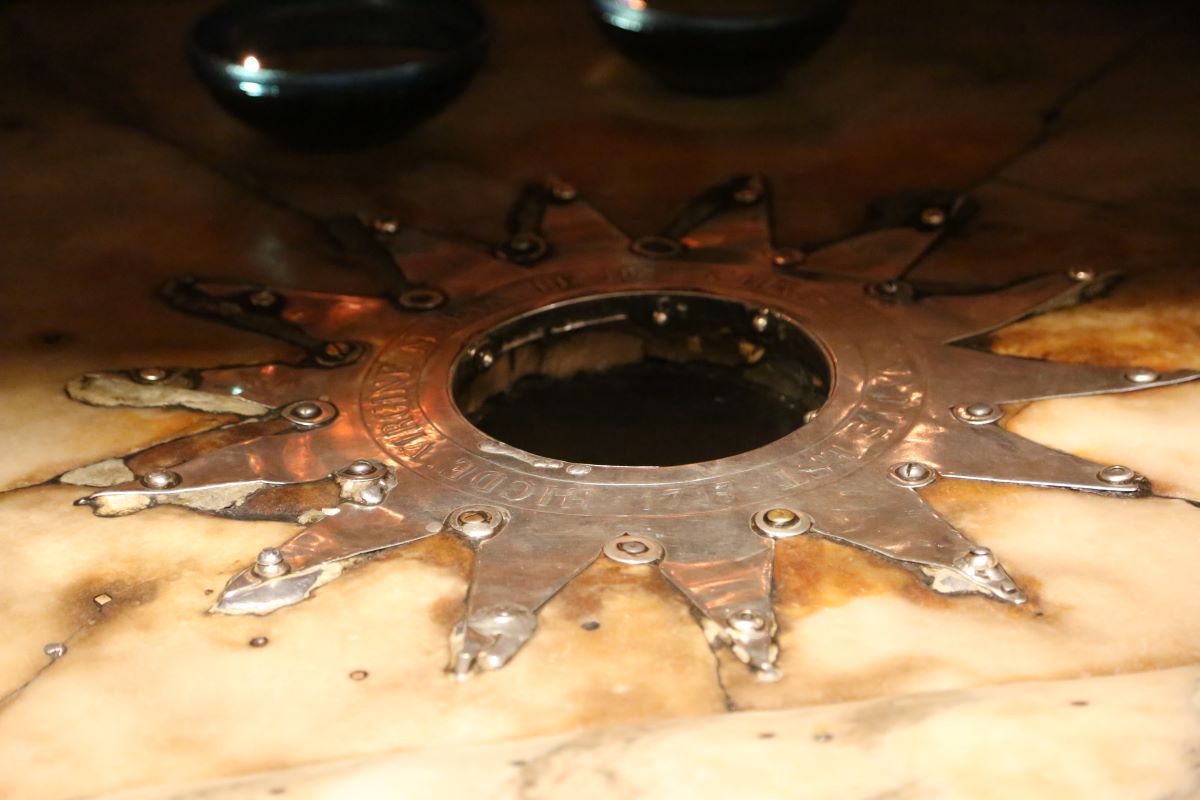
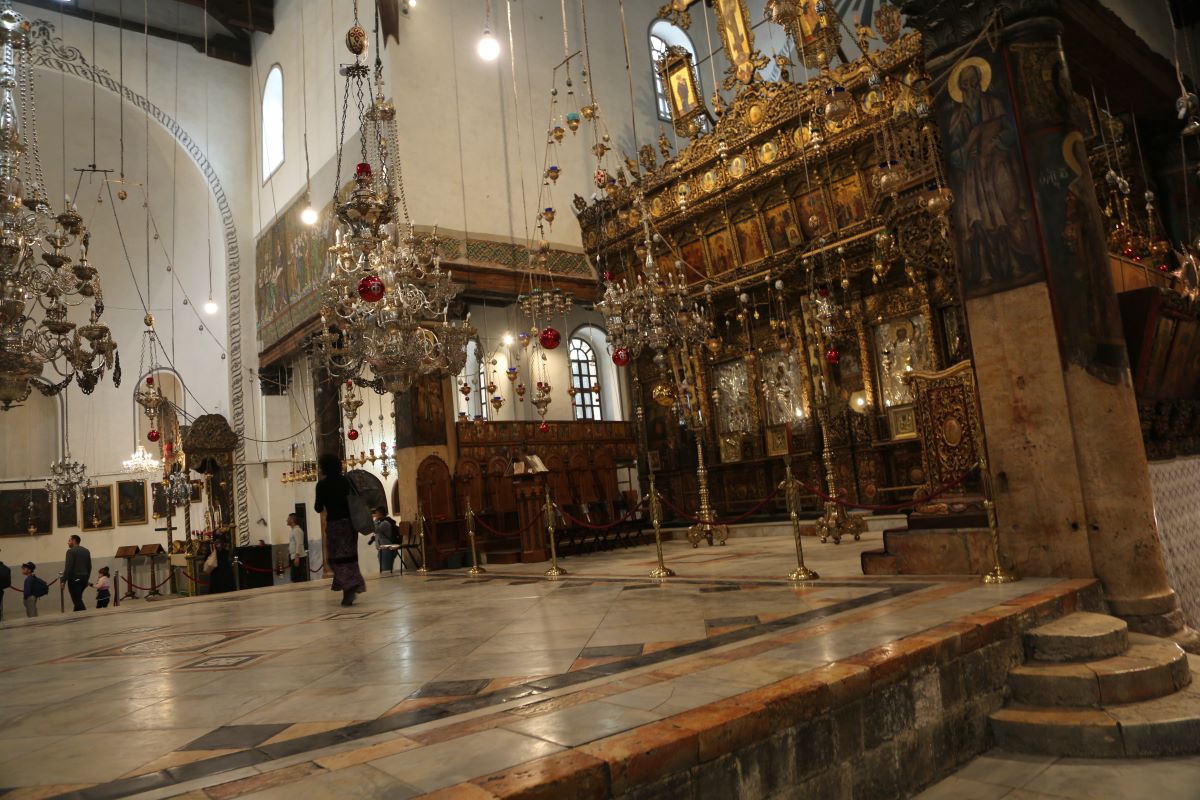
Architecturally, the Church of the Nativity is approximately 54 meters long, divided into a nave and four aisles by four rows of columns. Each column is six meters tall, made from a single stone, with a total of 44 columns originally quarried from the "Cross" quarry near Bethlehem. There are two doors on the sides of the church, opened during the Frankish era to facilitate entry and exit from the cave. The church also features an altar on the right, where the Orthodox and Armenian liturgies are conducted separately. Beneath the altar, a silver star bears the Latin inscription "Here Jesus Christ was born of the Virgin Mary," dated 1717. To the left, there is a two-step low area, the Holy Manger, covered with white marble sheets. The cave faces east, and the total area of the Church of the Nativity is approximately 1040 square meters.